The Present and Future of Forex: How to Stay Ahead of the Curve
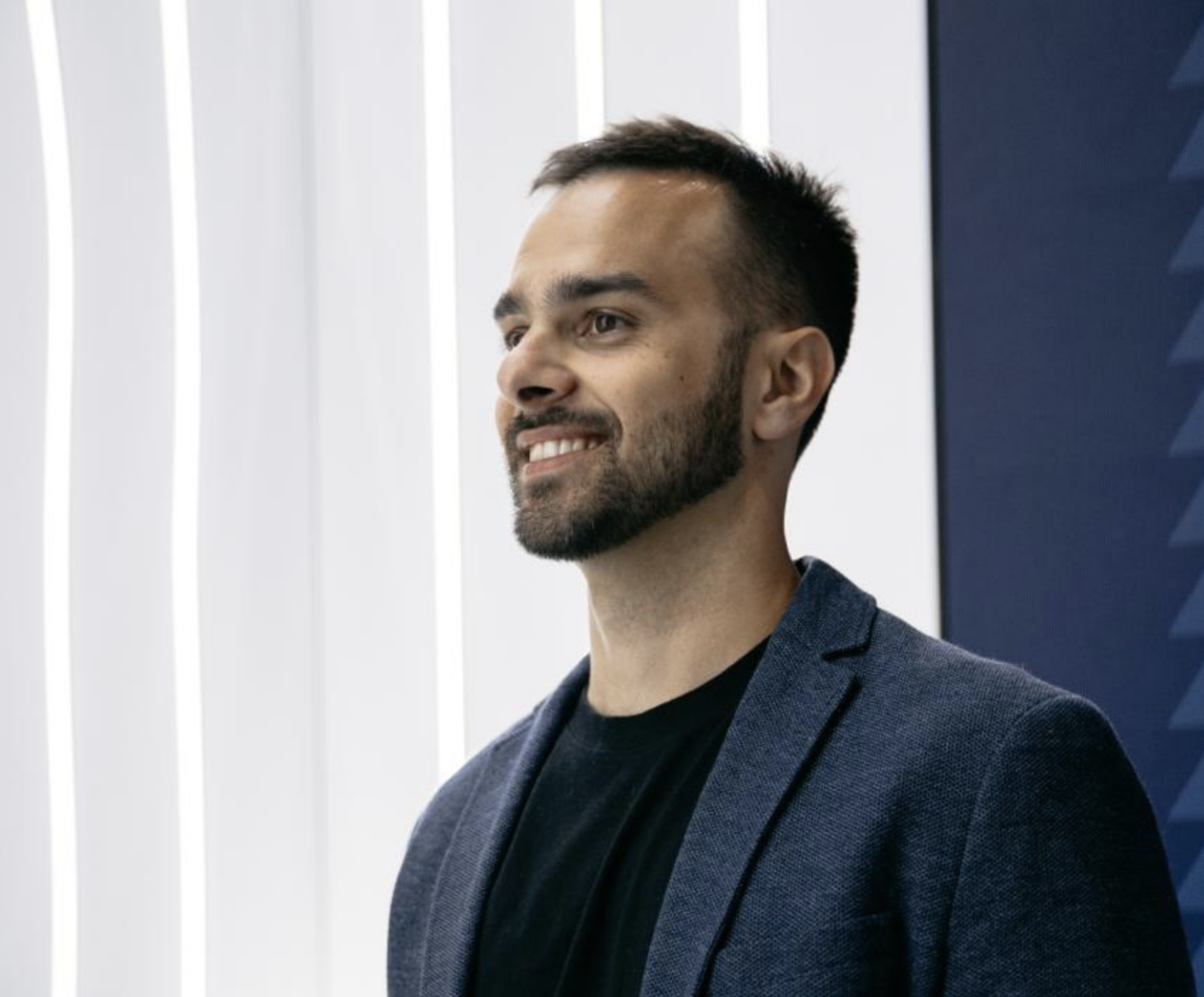
At the Argentine office of Bridge Markets LTD, Martin Scariati oversees operations and growth for a fintech group comprising five business units. His team places particular emphasis on promotion and in-app traffic acquisition. Scariati believes that trial and error is a perfectly valid way to gain professional experience. He also shares his perspective on B2B as a tool for achieving business goals in the forex market.
PHR: At the National Technological University (UTN), you specialized in project management at the Faculty of Management. You also worked in the public sector, where many Argentinians aspire to build a career... How did you end up in forex, and why did you choose to focus on marketing?
M.S.: Well, effective marketing and public service don't exactly go hand in hand (laughs)... But at some point, I became interested in cryptocurrency, and that's when I started working with Vladimir Kozlov at Libertex.
I joined as an investment consultant and quickly realized that instead of looking for individual clients myself, it would be much more productive to have someone bring those clients to me.
But how could I make that happen? I had to immerse myself in marketing and B2B products: CRM, A/B testing, landing pages, funnel optimization, and strategy.
Later, I became head of a regional department that handled marketing separately for Chile, Argentina, Peru, Ecuador, and Mexico.
PHR: Why separately?
M.S.: Well, for most Europeans and Americans, Latin America is basically one big Spanish-speaking country... But there are enormous differences between these markets, in terms of language, habits, and culture.
If you don't account for the specifics of each individual target audience, you won't be able to position your product effectively. This applies to any product, but especially to casinos.
PHR: Uh, weren't we supposed to be talking about forex?
M.S.: They're related industries. Although, if we compare them, becoming a gambling customer is much easier than becoming a forex trader, where certain knowledge and skills are required.
But there's also something they have in common: FX brokers generate synthetic indices, which are products that, by their very nature, are quite similar to betting.
And in both cases, we're dealing with volatility, which triggers very similar emotions in people.
PHR: Who spends more on marketing — casinos or forex companies?
M.S.: From the perspective of performance marketing agencies, casinos are the most important clients.
As for the forex market specifically, I'd point out that the number of traders — our customers — is growing more slowly than the number of CFD platforms.
Meanwhile, marketing has undeservedly taken a back seat in this industry. Companies are investing less and less in it.
The situation is further complicated by the fact that forex brokers now face fierce competition from digital wallets and other fintech companies that have simplified access to related financial instruments.
PHR: So what should they do?
M.S.: At the operational level, integrating local payment methods works extremely well.
When it comes to promotion, B2B is absolutely essential. The fundamental strategy is to thoroughly understand your target audience.
PHR: What would you recommend to people who didn't study marketing at university but want to develop relevant skills and apply them in their work in forex?
M.S.: The best way to learn is through trial and error.
Promoting a company or product involves numerous departments and disciplines — legal matters, programming, macroeconomics... University lecture notes alone will never be enough.
But today, there are plenty of opportunities to gain practical exposure. For example, B2B groups on LinkedIn can help you understand how conversion mechanisms work.
Most importantly, though, those groups bring you into contact with brokers — real people with real experience.
Offline events are also extremely valuable. Take conferences like SiGMA, where you'll find plenty of companies that know how to work with traffic.
It doesn't matter that the event focuses on iGaming... In fact, that's even better.
PHR: We remember that Latin America isn't "one big country"... But if we look at the regional average, what are typical initial deposits in forex?
M.S.: It depends on the broker. The average first deposit is around USD 100.
PHR: What are the prospects for the market overall?
M.S.: The market will continue to grow, but competition among brokers will become increasingly intense.
And to compete with digital wallets, brokers will have to operate 24/7.
That would give them a chance to respond more quickly to macroeconomic developments, such as the recent fluctuations in the US dollar during the tensions surrounding the Strait of Hormuz.
#Argentina
Weekly high-risk digest
Regulation, sanctions and payment news across your verticals — once a week, free.
Please check your inbox and click the link to confirm your subscription.
Please enter a valid email address!
Comments