The Nuances of Brazil’s Current Crisis: Local Specifics, Opportunities, and Risks
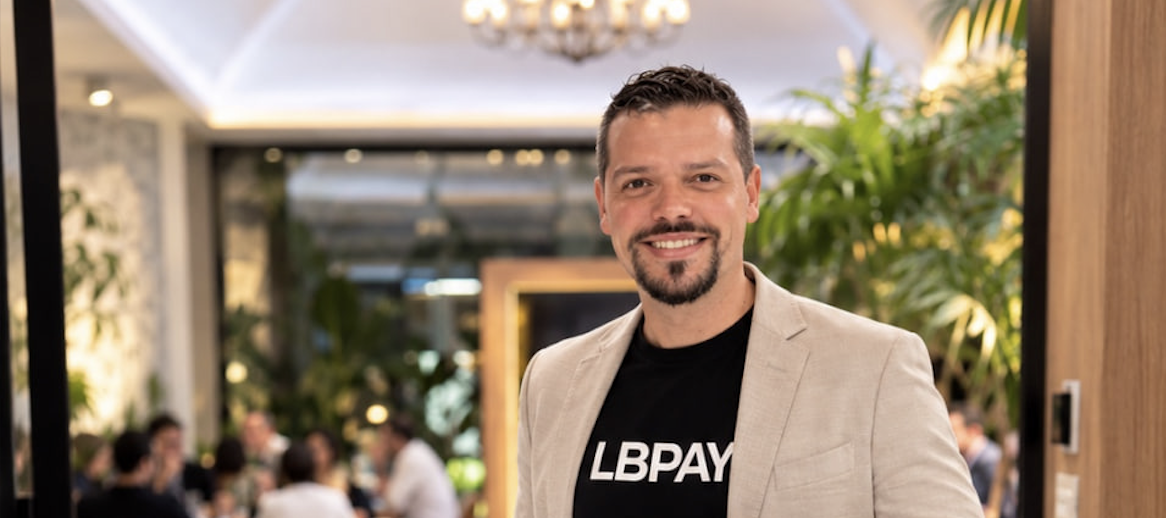
The website of LBPay, where Bruno Gonçalves works, promotes a “payment ecosystem for digital entertainment” with “full regulatory compliance.” But how is that possible when most of its clients suddenly find themselves operating outside the law? Did the number of transactions really drop by an average of 10% in the first three days following the betting ban? And what can companies do to navigate the crisis? Read our interview to find out.
PHR: Bruno, how did you get into the payments industry? And why high-risk in particular?
Bruno Gonçalves: I started my career in finance as a technology provider for banks before specializing in open banking. A major milestone was spending three years at the international payment platform OKTO, where I initially served as Sales Director for Brazil and Mexico and later became Head of Commercial Operations for all of Latin America.
But I think my most important experience was participating in the development of Brazil’s instant payment system, Pix, in 2020.
It's important to understand that today, the vast majority of transactions on betting and online casino platforms are processed through Pix. I was genuinely impressed by the growth potential and decided to explore this industry further.
PHR: You mean the gambling industry?
Bruno Gonçalves: Exactly. In 2020, no other industry was growing at such a pace. And this was during COVID, when you would have expected online e-commerce to be experiencing its biggest boom.
Of course, the famous Black Friday of 2020 broke every sales record. But that record was surpassed sevenfold two years later during the 2022 FIFA World Cup.
During the knockout stages, the same number of transactions that had been recorded on Black Friday 2020 was being processed in just two days — repeatedly, throughout the period from December 3 to December 18.
These figures are accurate because they are based on Pix statistics, and Pix was practically the only payment method used in both cases.
PHR: What role does gambling play — or perhaps did play — in the client portfolio of your current company, LBPay?
Bruno Gonçalves: Let's put it this way: over the past five months, gambling operators accounted for 80% of our transaction volume, across 15 clients.
And yes, unfortunately, at this point we can speak about those clients in the past tense.
PHR: What happened on September 25?
Bruno Gonçalves: The government announced the "suspension" of betting platforms. President Lula da Silva had been threatening this for a long time and eventually signed a decree banning online gambling.
This decree triggered a crisis not only for gambling operators and supporting industries like ours, but also raised serious ethical concerns — both corporate and societal.
Gambling was entirely legal. It created an enormous number of jobs, generated tax revenue, and provided funding for football clubs, which are an essential part of our culture.
Instead, the government made "Tigrinho" the scapegoat for all its failures, shifted the blame onto gambling, and decided to use it as a way to win more voters.
PHR: And did it work?
Bruno Gonçalves: So far, probably not. But we'll know for sure on October 25, when the second round of the elections takes place.
PHR: Some companies are challenging the ban in court. Stake, for example, managed to secure the right to resume operations, although only until October 25. But if Lula loses the election, couldn't everything change again?
Bruno Gonçalves: We're going to see a flood of similar lawsuits from operators.
The government's actions were treacherous, and companies that have been operating legitimately and contributing to the country aren't going to surrender their positions without a fight.
PHR: Is it true that overall payment volume across Brazil fell by 10% during the first three days after the ban?
Bruno Gonçalves: No.
The thing is, sporting events are generally not held during elections, which means nobody is placing bets — at least not legally.
Everything resumed on Monday, September 28. In fact, Pix transaction activity registered a spike that day, with approximately 1,000 new mirror websites appearing online.
The market rapidly went underground.
PHR: Do you still believe that operating legally and transparently is the better and more appropriate approach?
Bruno Gonçalves: Yes.
It provides the freedom to invest and develop new technologies. LBPay wants to preserve its existing safeguards and growth opportunities, particularly the possibility of expanding internationally into other markets.
We are directly connected to the Central Bank of Brazil, and that's undoubtedly a major advantage for our market positioning.
PHR: If moving to the "dark side" isn't an option, what are you planning to do now? Do you have a strategy for the next 90 days?
Bruno Gonçalves: Diversification.
We're looking at online education, which is currently a major growth trend, and payroll payments — for example, we're considering partnerships with the freight transportation industry. E-commerce is another opportunity.
As for high-risk, adult entertainment and poker remain viable segments.
PHR: Poker?! How does that work if online casinos are banned?
Bruno Gonçalves: In Brazil, poker isn't considered gambling.
It's classified as a game of skill, similar to chess.
PHR: Interesting... And what about your long-term plans?
Bruno Gonçalves: One possibility is to introduce lending services.
However, that requires a separate license, and under the Central Bank's procedures, obtaining it would take at least a year and a half.
PHR: When the market was still operating normally, what criteria did online casino and betting operators use to select a payment partner? Did those criteria differ between domestic and international operators?
Bruno Gonçalves: Not particularly.
I'd say 30–50% of the decision came down to trust in the company handling your money.
Second was performance — technology and conversion rates.
And third was the ability to process transactions 24/7.
That's because the legal regulatory framework imposed time-related restrictions, while most betting activity took place at night.
PHR: Which countries did your international clients come from?
Bruno Gonçalves: Singapore, the United States, Mexico, and Portugal, where LBPay also has a branch.
PHR: What lessons can the rest of Latin America learn from Brazil's experience?
Bruno Gonçalves: Clear and predictable legal frameworks are absolutely essential.
They're what determine whether investments are secure.
We've now lost that certainty, and the situation is beginning to resemble Venezuela, when the country was practically stripped of its oil.
Crises like these extend far beyond a single industry. They affect the entire economy at once.
And when they're driven by political processes, as we're seeing in Brazil today, the consequences become even more disastrous.
But we're not giving up without a fight.
Weekly high-risk digest
Regulation, sanctions and payment news across your verticals — once a week, free.
Please check your inbox and click the link to confirm your subscription.
Please enter a valid email address!
Comments