💼 Offshore Barometer Brazil: Offshore Is Shrinking, but Payments May Become More Expensive
💼 Offshore Barometer Brazil: Offshore Is Shrinking, but Payments May Become More Expensive
Analysis conducted with the support of Blask ⭐
The main conclusion after a year and a half of Brazil’s regulated market looks paradoxical:
Offshore operators have failed to capture a meaningful share of the market, but servicing the remaining offshore segment may become an increasingly valuable business for specialized PSPs.
💙 Offshore is large by number of brands, but small by money
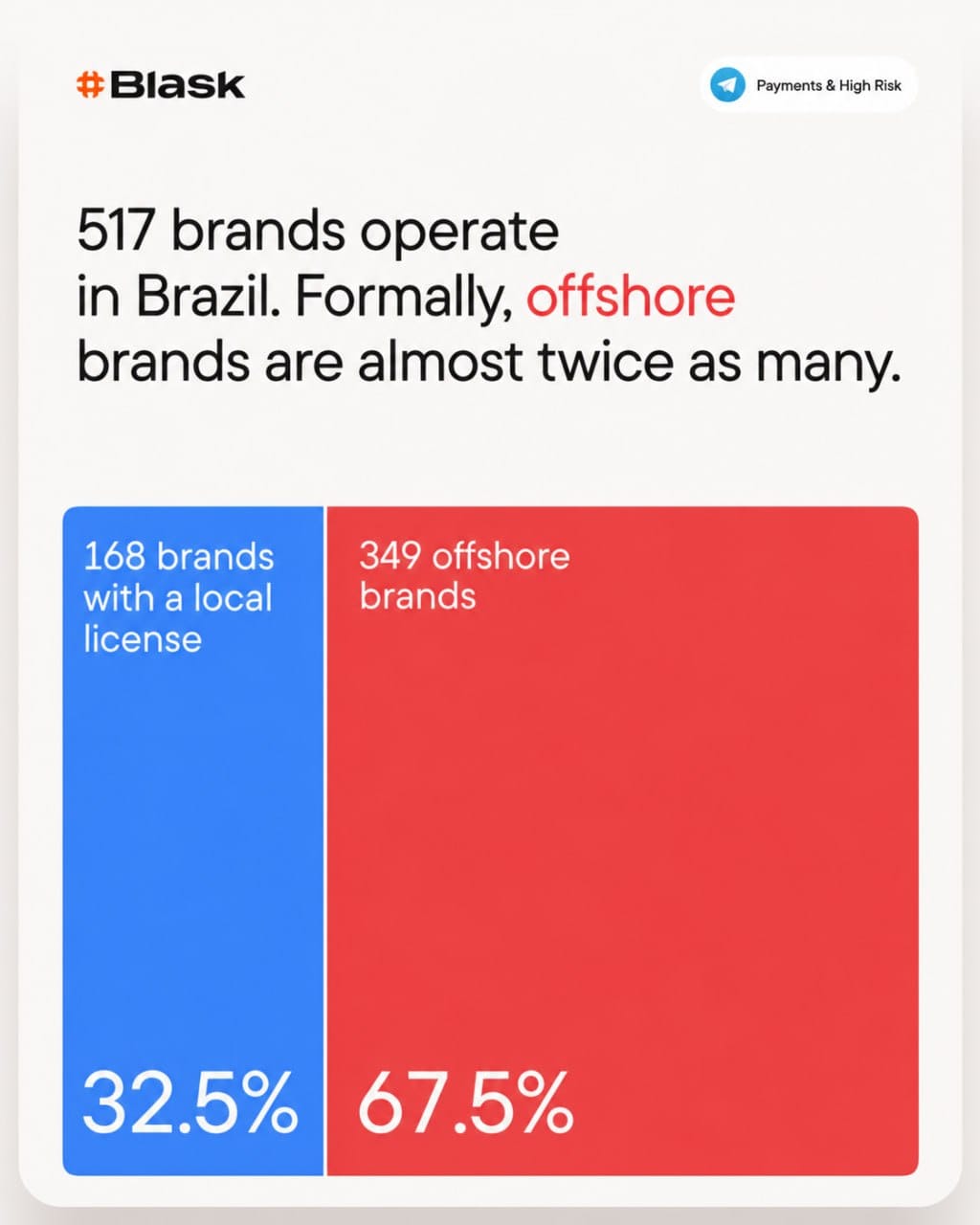
Blask tracks in Brazil:
💙 168 licensed brands
💙 349 offshore brands
That means 67.5% of brands operate without a local license.
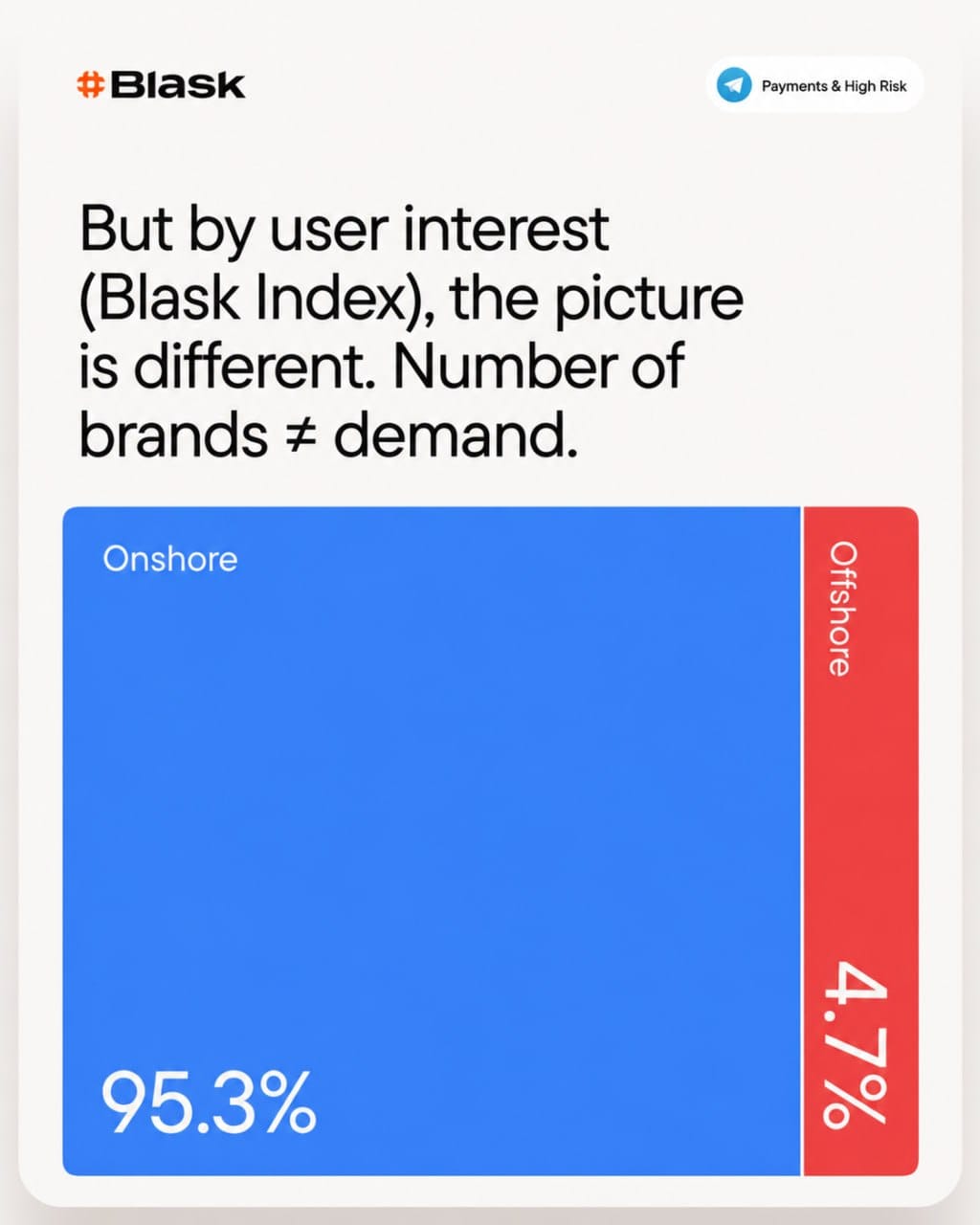
But in terms of user demand, the picture is the opposite:
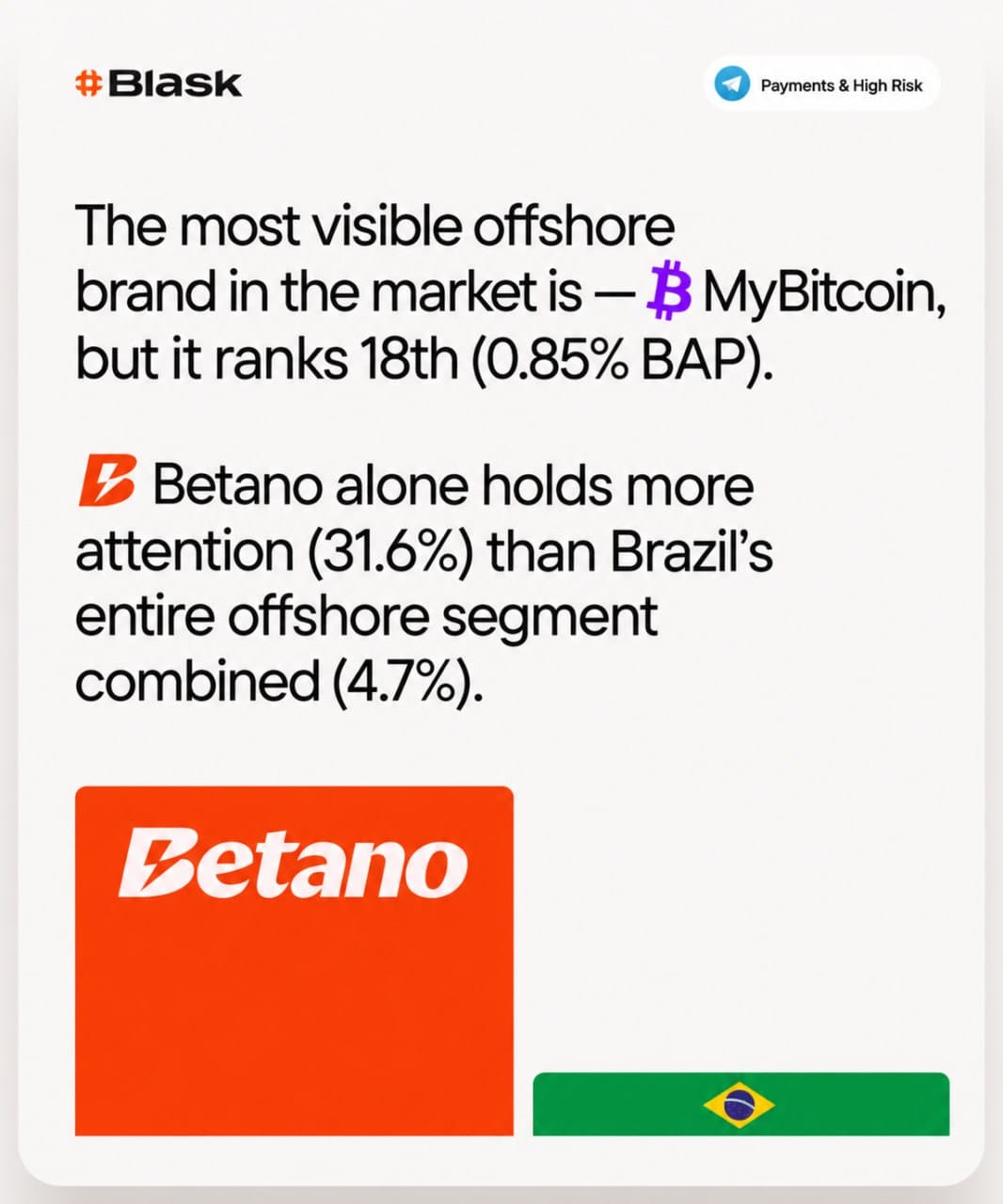
Licensed – 95.3%
Offshore – 4.7%
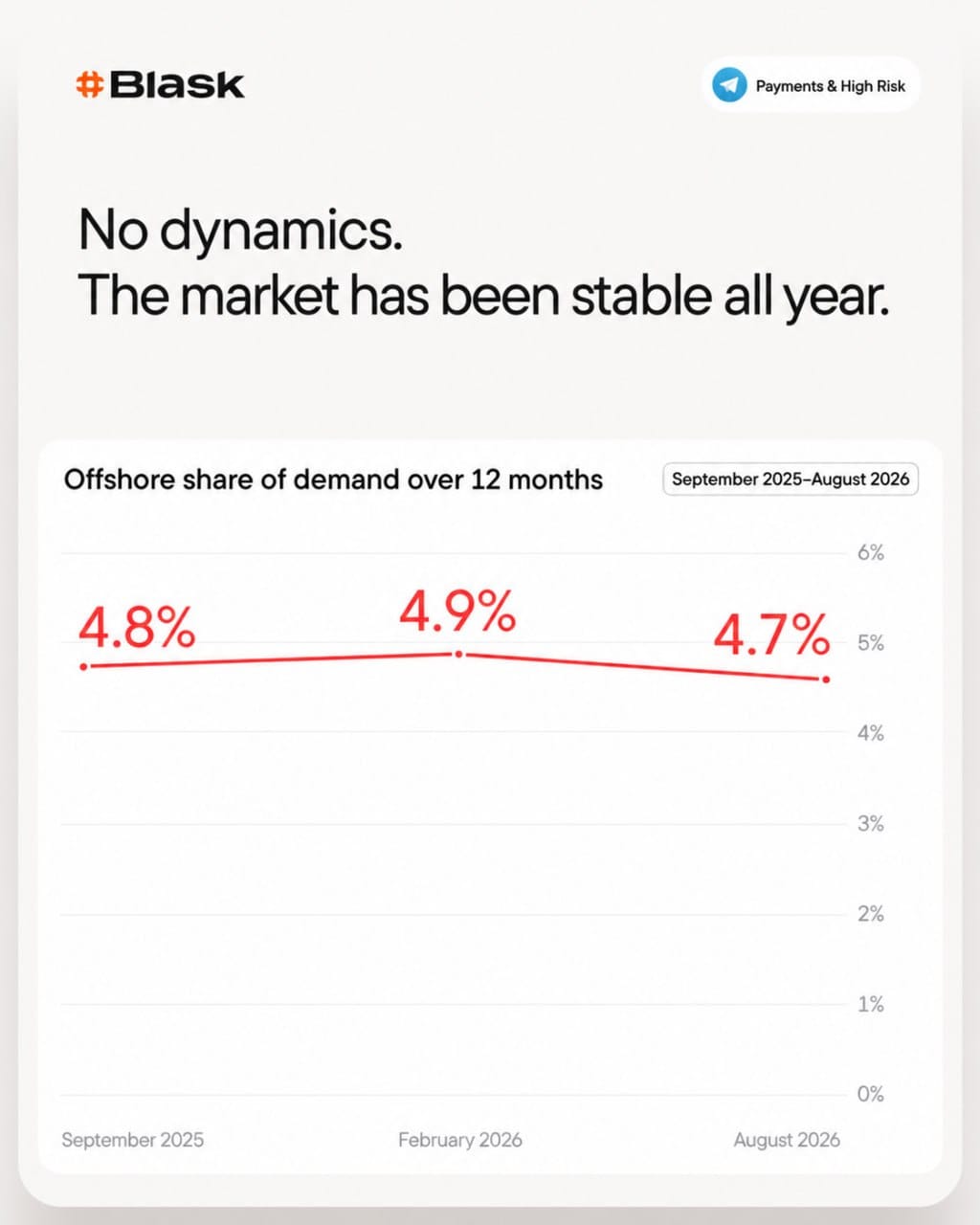
And this ratio has barely changed over the past year: offshore share remained within the 3.9–4.9% range.
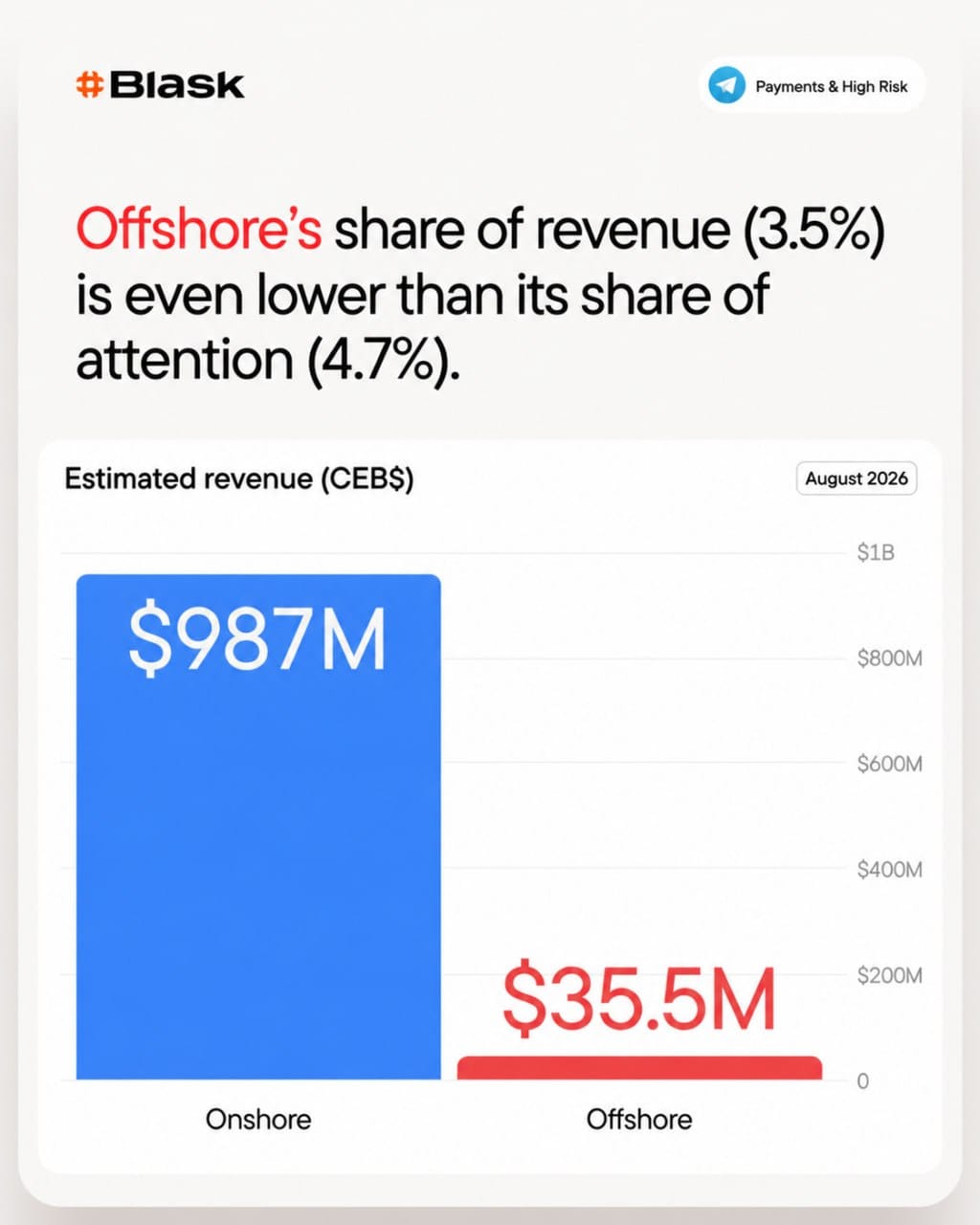
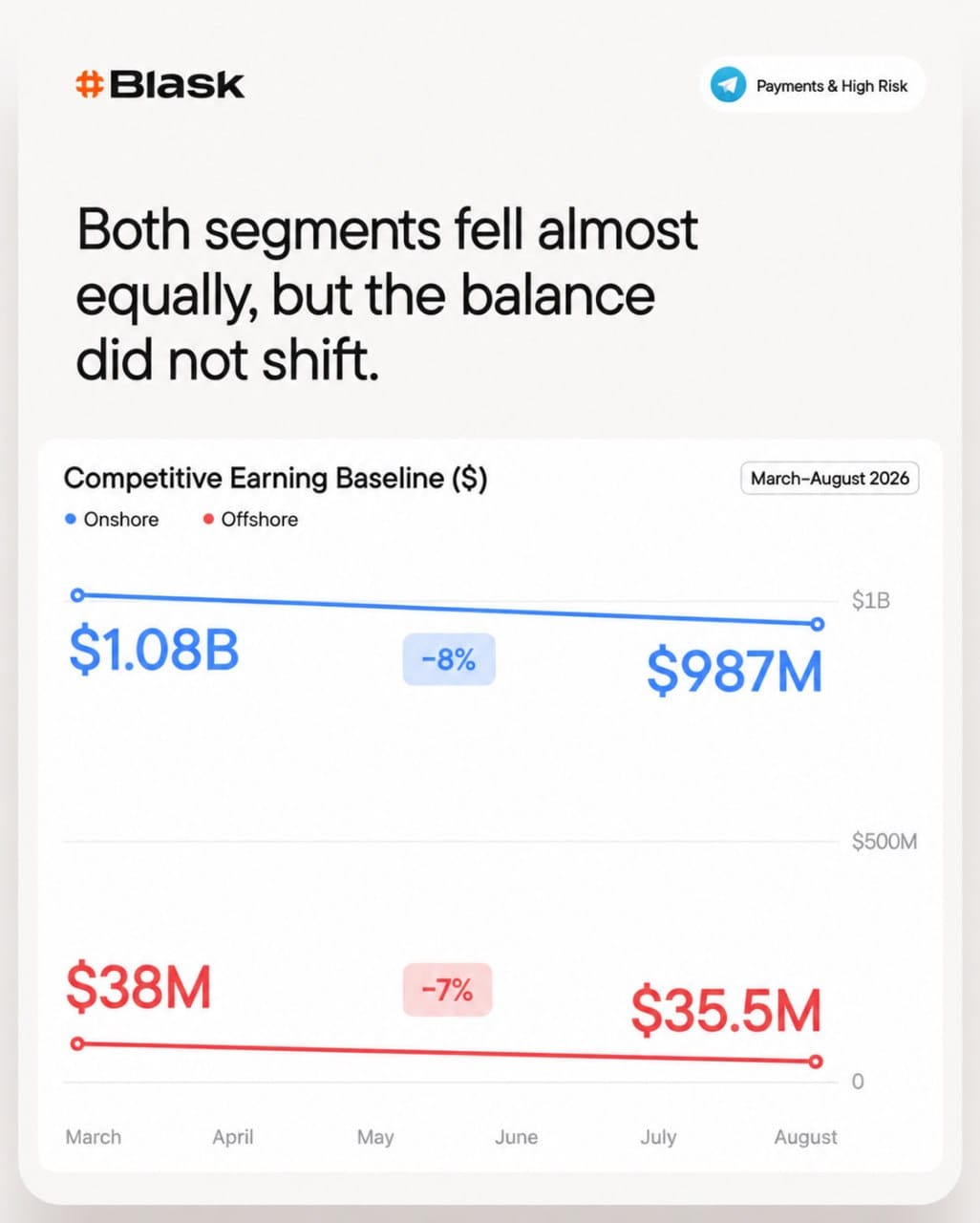
The gap is even wider when looking at estimated revenue:
💙 Licensed – ≈$987M
💙 Offshore – ≈$35.5M
So offshore accounts for only ≈3.5% of the money.
💙 But new players are flowing there at a noticeably higher rate
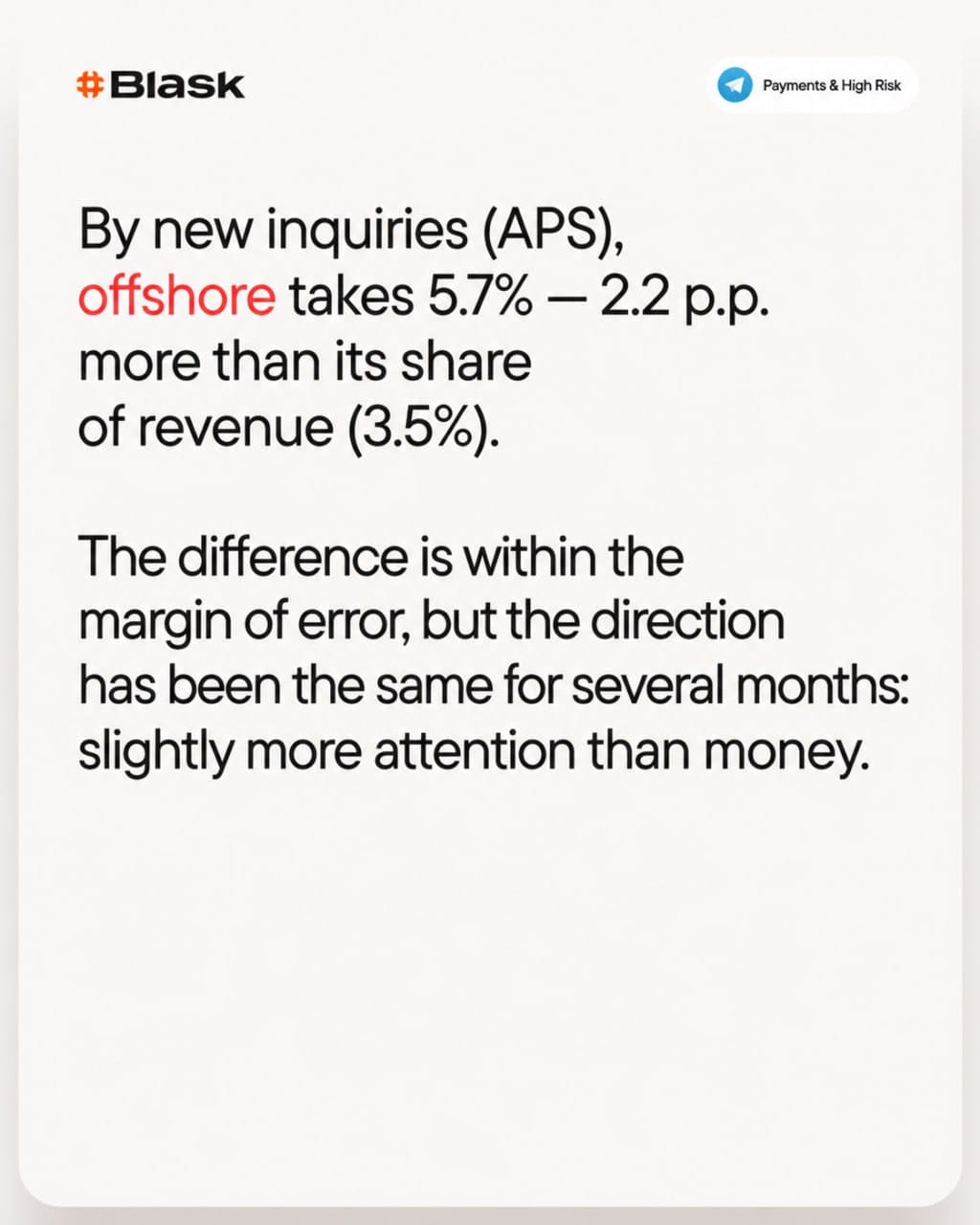
Offshore brands already account for 5.7% of the Acquisition Power Score.
This creates the following funnel:
5.7% acquisition → 4.7% attention → 3.5% revenue
Offshore attracts a disproportionately high share of new players, but converts that interest into revenue much less effectively.
For operators, this is a monetization problem.
For PSPs, potentially an opportunity.
The key question is: where exactly is the player lost between registration and revenue?
If a meaningful share of the losses occurs across:
deposit attempt → successful deposit → repeat deposit → withdrawal
then part of offshore operators’ “weak monetization” may in fact represent unmet payment demand.
💙 Regulation changes the economics of processing
The state may not eliminate demand for offshore operators, but it can sharply increase the cost of servicing that demand.
The fewer banks, payment rails and sustainable processing setups remain available, the more valuable every functioning channel becomes.
For providers, this means an increase not only in headline fees, but in the total cost of processing:
fee + reserve + liquidity + FX + settlement risk + cost of lost conversion
In Brazil, it therefore becomes increasingly important to look beyond the quoted rate and focus on the effective cost per successful deposit.
What this means for PSPs
Brazil’s offshore segment does not currently look large in terms of market share.
But it may represent an opportunity as a scarcity-driven payments market.
There are many merchants, but fewer genuinely sustainable payment solutions.
This may lead to payment-market consolidation around providers capable of maintaining several things at once:
💙 multiple independent channels
💙 liquidity
💙 risk management
💙 stable settlements
What to expect next
Offshore may not grow as a share of Brazil’s iGaming market, but the cost of servicing its payments could grow faster than the segment itself.
Offshore is becoming smaller as an operator market, but potentially more expensive (and more valuable) as a payments market.
Weekly high-risk digest
Regulation, sanctions and payment news across your verticals — once a week, free.
Please check your inbox and click the link to confirm your subscription.
Please enter a valid email address!
Comments